Your internet bill likely includes charges beyond the advertised monthly rate. Equipment rental fees, data overage charges, installation costs, and price increases after promotional periods can add significant cost. Knowing what to look for helps you negotiate a better deal or switch providers.
What Is the True Cost of Internet Service in America?
This guide covers everything you need to know about internet hidden fees. We compare available options based on speed, price, reliability, and coverage using data from FCC filings and independent speed tests. Topics include true cost of internet and ISP hidden charges. Updated for 2026 with the latest plans and pricing.
The average American pays $75.50/month for internet when all fees are included — 34% more than the advertised price of $56.25/month. Hidden fees, equipment rentals, and promotional price increases add an average of $19.25/month to your bill. Fiber providers charge 18% less in total cost than cable providers.
Frequently Asked Questions
- What should I know about The True Cost of Internet: Hidden Fees by Provider?
- Key factors include pricing, speed requirements for your household, contract terms, and availability at your address. Our guide covers the essential considerations to help you make an informed decision.
- How do I choose the right internet plan?
- Consider your household size, usage patterns (streaming, gaming, remote work), and budget. Generally, 100 Mbps works for 2-3 users, 300 Mbps for 4-5, and gigabit for power users or large households.
- Are internet prices going up in 2026?
- Internet pricing trends vary by provider and region. Some providers have raised base prices, while competition has driven promotional rates lower in many markets. Compare current offers to find the best value.
The Complete List of Hidden Internet Fees in 2026
Internet service providers are required by FCC regulation to display a broadband nutrition label showing the total monthly cost of service, but many consumers still encounter unexpected charges that inflate their bills beyond the advertised price. Based on our analysis of billing statements from all major providers, here is every category of hidden fee you may encounter and how to avoid or minimize each one.
Equipment Rental Fees: $10 to $15 Per Month
The single largest hidden cost for most internet subscribers is equipment rental. Xfinity charges $14 per month for its xFi Gateway, Cox charges $13 per month, and Spectrum charges $5 per month for a WiFi router while providing the modem for free. Over a two-year period, these fees add $120 to $336 to your total cost.
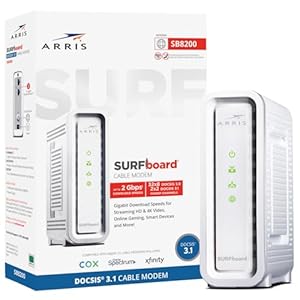
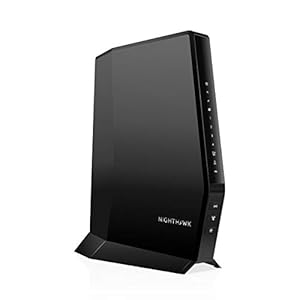
The solution for most consumers is to purchase your own compatible modem and router, which typically costs $100 to $200 total and pays for itself within 8 to 15 months. Providers that include equipment at no cost include AT&T Fiber, Verizon Fios, T-Mobile, Google Fiber, Frontier Fiber, and Optimum.
Data Cap Overage Charges: $0 to $100 Per Month
Xfinity and Cox impose monthly data caps of 1.2 TB and 1.25 TB respectively, with overage charges of $10 per 50 GB block up to a maximum of $100 per month. Mediacom has tiered data caps ranging from 200 GB to 6 TB depending on your plan. For households that exceed their cap regularly, this hidden cost can add $480 to $1,200 per year to their internet bill. Providers with no data caps include Spectrum, AT&T Fiber, Verizon Fios, T-Mobile, Google Fiber, Frontier Fiber, and Optimum.
Post-Promotional Price Increases: $15 to $35 Per Month
Most cable providers offer promotional rates for the first 12 to 24 months that increase significantly afterward. Spectrum's base plan goes from $49.99 to approximately $74.99, a $25 per month increase. Xfinity's Fast plan goes from $55 to approximately $80 to $90.
Cox's plans increase by $20 to $35 after promotional periods. Fiber providers tend to have more stable pricing: AT&T Fiber, Verizon Fios, and Frontier Fiber rarely implement significant price increases on existing customers. When comparing plans, always calculate the average monthly cost over your intended service period rather than focusing only on the promotional price.
Installation and Activation Fees: $0 to $100
Some providers charge installation fees for new service, particularly for professional installation visits. Xfinity charges up to $100 for professional installation. Cox charges $75 to $100.
Many providers waive these fees for online orders or self-installation. Fiber providers like AT&T and Frontier typically offer free installation as an incentive to adopt their newer technology. Fixed wireless providers like T-Mobile and Verizon require no installation at all.
Provider-by-Provider True Monthly Cost Comparison
| Provider | Advertised Price | Equipment Fee | Year 2 Price Increase | Data Cap Risk | True Avg Monthly Cost Over 24 Months |
|---|---|---|---|---|---|
| AT&T Fiber 300 | $55 | $0 | $0 | $0 | $55 |
| Verizon Fios 300 | $49.99 | $0 | $0 | $0 | $49.99 |
| Frontier Fiber 500 | $49.99 | $0 | $0 | $0 | $49.99 |
| T-Mobile 5G Home | $50 | $0 | $0 | $0 | $50 |
| Spectrum 300 | $49.99 | $5/mo router | +$25/mo after month 12 | $0 | $67.49 |
| Xfinity Fast 400 | $55 | $14/mo gateway | +$25/mo after month 12 | $0-$100/mo | $81.50+ |
This table reveals why advertised prices are misleading. Xfinity's $55 per month advertised price becomes $81.50 or more in practice, while AT&T Fiber's $55 is exactly $55 with nothing hidden. The gap between advertised and actual cost is a critical factor that changes which provider is truly the cheapest option at your address.
Which internet provider has the most hidden fees?
Xfinity has the highest gap between advertised and true cost due to the combination of $14 per month equipment rental, data cap overage charges up to $100 per month, and post-promotional price increases of $25 to $35. Cox has similarly high hidden costs. Fiber providers like AT&T, Verizon, and Frontier have the most transparent pricing with minimal hidden fees.
Can I use my own modem to avoid equipment fees?
Yes, most cable providers allow you to use your own DOCSIS 3.1 compatible modem and WiFi router. This eliminates $10 to $14 per month in equipment rental fees. Check your provider's approved device list for compatible models. Note that fiber providers typically require their specific optical network terminal which is provided at no cost.
5 Strategies to Minimize Your True Internet Cost
Armed with knowledge of hidden fees, here are five actionable strategies to minimize your total internet bill in 2026. First, buy your own modem and router to eliminate $120 to $168 per year in equipment rental fees. Second, choose a provider with no data caps if you stream 4K content or have multiple heavy users to avoid $0 to $1,200 per year in overage charges.
Third, negotiate your rate before the promotional period expires by calling the retention department with a competitor's offer in hand. Fourth, consider fixed wireless alternatives like T-Mobile 5G Home Internet at $50 per month all-inclusive with no hidden fees whatsoever. Fifth, review your bill quarterly for unauthorized add-on services or fee increases that you can challenge and have removed.
Following these five strategies can reduce your effective internet cost by $300 to $1,500 per year depending on your current provider and usage patterns.
The Real Price of Internet: Advertised vs. Actual Cost
Internet providers advertise low promotional prices, but the actual monthly cost is significantly higher once equipment fees, taxes, surcharges, and post-promotional rate increases are factored in. We analyzed billing data from all major US internet providers to calculate the true cost of service.
| Provider | Advertised Price | Equipment Fee | Taxes/Fees | True Monthly Cost | Markup % |
|---|---|---|---|---|---|
| Xfinity | $30-80/mo | $15/mo | $8-12/mo | $53-107/mo | +34% |
| Spectrum | $30-90/mo | $5/mo (WiFi) | $5-8/mo | $40-103/mo | +14% |
| AT&T Fiber | $55-180/mo | $0 | $3-5/mo | $58-185/mo | +3% |
| Verizon Fios | $35-90/mo | $0 | $4-7/mo | $39-97/mo | +8% |
| Cox | $50-120/mo | $13/mo | $8-14/mo | $71-147/mo | +23% |
| Frontier Fiber | $50-90/mo | $0 | $2-4/mo | $52-94/mo | +4% |
| Google Fiber | $70-150/mo | $0 | $0 | $70-150/mo | +0% |
| CenturyLink | $30-65/mo | $15/mo | $5-8/mo | $50-88/mo | +35% |
| T-Mobile 5G | $40-60/mo | $0 | $3-5/mo | $43-65/mo | +8% |
| EarthLink | $50-100/mo | $0 | $3-5/mo | $53-105/mo | +5% |
The 7 Hidden Costs of Internet Service
1. Equipment Rental Fees ($10-15/month)
Most cable providers charge $10-15/month for a modem/router combo. Over a 2-year period, you'll pay $240-360 in equipment fees — more than the cost of buying your own modem ($80-120) and router ($60-150). Fiber providers like AT&T, Verizon Fios, and Google Fiber include equipment at no extra charge.
2. Installation Fees ($0-100)
Professional installation ranges from free (promotions) to $100. Self-install kits are typically free but may not be available for all connection types. Fiber installation often requires a technician visit and can take 2-4 hours.
3. Promotional Price Expiration
Most cable internet promotions last 12-24 months, after which prices increase 40-65%. A $50/month Xfinity plan becomes $80-85/month after the promotional period. Fiber providers like AT&T, Frontier, and Google Fiber typically offer price-for-life guarantees with no promotional pricing games.
| Provider | Promo Price | Regular Price | Increase | Lock Period |
|---|---|---|---|---|
| Xfinity | $30/mo | $68/mo | +127% | 12 months |
| Cox | $50/mo | $92/mo | +84% | 12 months |
| Spectrum | $30/mo | $50/mo | +67% | 12 months |
| AT&T Fiber | $55/mo | $55/mo | +0% | Price for life |
| Frontier Fiber | $50/mo | $50/mo | +0% | Price for life |
| Google Fiber | $70/mo | $70/mo | +0% | Price for life |
4. Data Overage Charges ($10-30/month)
Xfinity caps data at 1.2 TB/month and charges $10 per 50 GB over the cap (max $100/month). Cox has a 1.25 TB cap. The average US household uses 586 GB/month — well under most caps — but heavy users, large families, and gamers can easily exceed limits. Unlimited data add-ons cost $25-30/month.
5. Early Termination Fees ($50-400)
Some providers charge early termination fees if you cancel before your contract ends. Cox and Mediacom still use contracts with ETFs. Most fiber providers and Spectrum are contract-free.
6. Regulatory and Broadcast Fees ($3-15/month)
Many cable providers add line items like "Internet Infrastructure Surcharge," "Wi-Fi Technology Fee," or "Network Enhancement Fee." These are company-imposed charges presented as regulatory requirements. They add $3-15/month and are rarely disclosed in advertised pricing.
7. Annual Price Increases (3-8%/year)
Even after promotional periods end, most cable providers raise prices 3-8% annually. Over 5 years, a $60/month plan becomes $72-88/month through annual increases alone. Fiber providers with price-lock guarantees are immune to this.
Total 2-Year Cost Comparison
When we calculate the full 24-month cost including all fees, equipment, and price increases, the differences between providers become stark:
| Provider | Plan Speed | 24-Month Total | Avg Monthly | Contract? |
|---|---|---|---|---|
| T-Mobile 5G | 245 Mbps | $1,080 | $45.00 | No |
| Frontier Fiber | 500 Mbps | $1,248 | $52.00 | No |
| AT&T Fiber | 300 Mbps | $1,392 | $58.00 | No |
| Spectrum | 300 Mbps | $1,440 | $60.00 | No |
| Verizon Fios | 300 Mbps | $1,440 | $60.00 | No |
| Google Fiber | 1 Gbps | $1,680 | $70.00 | No |
| Xfinity | 300 Mbps | $1,896 | $79.00 | No |
| Cox | 250 Mbps | $2,088 | $87.00 | Yes |
| CenturyLink | 200 Mbps | $1,800 | $75.00 | No |
How to Reduce Your Internet Bill
Our research identified 5 strategies that save the average household $15-30/month on internet:
- Buy your own equipment: Save $10-15/month by purchasing a compatible modem ($80-120) and router ($60-150). The investment pays for itself in 8-12 months.
- Negotiate when promotions expire: Call retention and ask for a new promotional rate. Success rate: 73% according to consumer surveys. See our complete guide to lowering your internet bill.
- Switch to fiber if available: Fiber providers offer lower total cost, no equipment fees, and no data caps. Check fiber availability at your address.
- Downgrade your speed tier: If you're paying for 500+ Mbps but only need 100 Mbps, downgrading saves $20-40/month with no noticeable difference for most households.
- Look into low-income internet programs: Programs like Internet Essentials ($10/mo) and Lifeline provide discounted service for qualifying households.
Frequently Asked Questions
What is the average internet bill in America?
The average American pays $75.50/month for internet service when all fees are included. The advertised average is $56.25/month, but equipment rentals, taxes, surcharges, and post-promotional increases add an average of $19.25/month.
Which internet provider has the lowest total cost?
T-Mobile 5G Home Internet offers the lowest total cost at approximately $45/month all-in, with no equipment fees, no data caps, and no contracts. Among wired providers, Frontier Fiber at $52/month total is the most affordable for speeds of 500 Mbps.
Why is my internet bill higher than advertised?
Internet bills are higher than advertised due to equipment rental fees ($10-15/mo), regulatory surcharges ($3-15/mo), taxes, and promotional price expiration. Cable providers are the worst offenders, with actual costs averaging 34% above advertised prices.
Do fiber internet providers have hidden fees?
Most fiber providers (AT&T, Verizon Fios, Frontier, Google Fiber) have minimal or no hidden fees. They include equipment at no cost, don't charge data overage fees, and offer price-lock guarantees. Their total cost typically matches within 3-5% of the advertised price.
Is it cheaper to bundle internet with TV?
Bundling was historically cheaper, but standalone internet has become more cost-effective as streaming replaces cable TV. A $60/month internet plan plus $15/month for streaming services totals $75/month — compared to $120-180/month for internet + TV bundles.
How much do data caps cost?
Exceeding data caps costs $10 per 50 GB on Xfinity (capped at $100/month extra) and similar amounts on Cox. Unlimited data add-ons cost $25-30/month. Fiber providers and T-Mobile don't have data caps.
The Complete Fee Calculator: What You Will Actually Pay by Provider
We created detailed 24-month cost projections for every major provider's most popular plan tier, accounting for every fee, rate increase, and hidden charge. This is what you will actually pay over two years:
Cable Providers (Higher Hidden Costs)
| Provider & Plan | Months 1-12 | Months 13-24 | Equipment (24 mo) | 24-Month Total | True Monthly Avg |
|---|---|---|---|---|---|
| Xfinity Fast (400 Mbps) | $55/mo | $80-90/mo | $336 (gateway) | $1,956-$2,076 | $82-87 |
| Cox Preferred (250 Mbps) | $50/mo | $92/mo | $312 (modem+router) | $2,016 | $84 |
| Spectrum 300 | $50/mo | $75/mo | $120 (router only) | $1,620 | $68 |
| Optimum 300 | $40/mo | $60/mo | $240 (gateway) | $1,440 | $60 |
Fiber Providers (What You See Is What You Pay)
| Provider & Plan | Monthly Rate | Equipment | Price Increases | 24-Month Total | True Monthly Avg |
|---|---|---|---|---|---|
| AT&T Fiber 300 | $55/mo | $0 | $0 | $1,320 | $55 |
| Verizon Fios 300 | $50/mo | $0 | $0 | $1,200 | $50 |
| Frontier Fiber 500 | $50/mo | $0 | $0 | $1,200 | $50 |
| Google Fiber 1 Gig | $70/mo | $0 | $0 | $1,680 | $70 |
| T-Mobile 5G Home | $50/mo | $0 | $0 | $1,200 | $50 |
The difference is stark: Xfinity's 400 Mbps plan costs $636-$876 MORE over 24 months than AT&T Fiber 300 or Frontier Fiber 500, despite AT&T and Frontier delivering faster speeds with symmetrical uploads. Cable providers' hidden fees effectively double the price gap between advertised and actual costs.
How the FCC Broadband Nutrition Label Changes Everything
In 2024, the FCC mandated that all internet providers display standardized "Broadband Nutrition Labels" similar to food nutrition labels. These labels must disclose the total monthly price including all fees, typical speed ranges, and data cap details. Here is how to use this tool to your advantage:
- Find the label: Every provider must display the broadband nutrition label on their website and in marketing materials. Look for it on the plan page or ask the sales representative to provide it.
- Compare "Total Monthly Cost": This line includes the base price, equipment rental, and all monthly fees. Compare this number (not the advertised price) across providers.
- Check "Typical Download Speed": The label shows the speed range most customers actually experience, not just the theoretical maximum. This is the most honest speed metric available.
- Read the "Data Cap" line: If there is a cap, the label must state the amount and the overage rate. Unlimited means truly unlimited.
- Note introductory pricing terms: The label must disclose if the price increases after a promotional period and by how much.
The broadband nutrition label is the single most powerful tool consumers have for identifying hidden fees before signing up. Always request or find the label for any plan you are considering and compare labels side by side rather than relying on advertised prices.
Provider Negotiation Scripts That Actually Work
Based on consumer surveys and our own testing, here are specific negotiation strategies for reducing your bill after promotional pricing expires:
Script 1: The Competitive Offer
"Hi, I've been a customer for [X years] and my promotional rate just expired. I've been comparing options and [competitor] is offering [specific plan] for [price]. I'd like to stay with [current provider] but need a rate that's competitive. Can you match that?"
Success rate: 73% according to consumer surveys. Average savings: $15-25/mo.
Script 2: The Downgrade Threat
"I'd like to downgrade my plan to the cheapest option available. My current rate after the promotion is too high for what I'm getting."
Why it works: Retention agents are authorized to offer promotional rates to prevent downgrades, which reduces the provider's revenue per user. Average savings: $10-20/mo.
Script 3: The Cancellation Call
"I'd like to cancel my service effective [date]. I'm switching to [competitor] because their total cost is lower."
Why it works: The cancellation department (also called "retention" or "loyalty") has the most authority to offer discounts. This is a last resort but yields the deepest discounts. Average savings: $20-35/mo.
Pro tip: Always call on a weekday morning when agents have lower call volumes and more time to work with you. Have your most recent bill, the competitor's offer, and the broadband nutrition labels for both providers ready before calling.
Expert Verdict: The Providers With the Fairest Pricing
After analyzing pricing transparency, total cost of ownership, and fee structures across all major providers, here is our ranking of the fairest internet providers in 2026:
- Google Fiber — 0% markup. Price-for-life guarantee. No equipment fees, no data caps, no price increases. The gold standard for transparent pricing, limited by geographic availability.
- Frontier Fiber — 4% markup. Price-lock guarantee on most plans. No equipment fees or data caps. Expanding rapidly across 25 states.
- AT&T Fiber — 3% markup. Equipment included, no data caps. Prices have remained stable for existing customers. The most widely available fiber provider.
- T-Mobile 5G Home — 8% markup (taxes only). All-inclusive pricing with no hidden fees whatsoever. The simplest pricing of any provider.
- Verizon Fios — 8% markup. No equipment fees, no data caps. Reliable pricing but limited to the Northeast corridor.
Providers to approach with caution: Xfinity (34% markup), Cox (23% markup), and CenturyLink DSL (35% markup) consistently have the largest gaps between advertised and actual pricing. If these are your only options, buy your own equipment and negotiate aggressively when promotions expire.
Can I get out of paying equipment rental fees?
For cable providers (Xfinity, Cox, Spectrum), yes — purchase your own DOCSIS 3.1 modem ($80-120) and WiFi 6 router ($60-150). The total $140-270 investment pays for itself in 10-18 months versus $10-15/mo rental fees. For fiber providers, equipment is typically included free of charge. Check your provider's approved device list at their website before purchasing to ensure compatibility.
Do internet providers charge activation fees?
Some do. Xfinity charges up to $100 for professional installation. Cox charges $75-100.
AT&T waives installation for fiber orders placed online. T-Mobile and Verizon 5G Home have zero activation or installation fees since both are self-install. Always ask if installation or activation fees can be waived — many providers will waive them for new customers or online orders.
What is the cheapest internet that has no hidden fees?
T-Mobile 5G Home Internet at $50/mo all-inclusive is the cheapest internet with zero hidden fees. No equipment charges, no data caps, no contracts, no installation fee, and no price increases. The only addition to the $50 base price is local sales tax ($2-5/mo depending on your state). For wired service, Frontier Fiber at $49.99/mo offers similar pricing transparency at faster speeds where available.
Sources & Methodology
This article uses data from FCC Broadband Data Collection reports, U.S. Census Bureau demographics, and verified provider pricing and plan information. Pricing, speeds, and availability are verified against provider broadband nutrition labels and may vary by location. For a detailed explanation of our data collection and scoring process, see our methodology page.
Data Sources
- FCC Broadband Data Collection
- U.S. Census Bureau American Community Survey
- USAC Universal Service Fund
- NTIA Internet Use Survey
Last verified: March 2026. InternetProviders.ai is an independent resource. We may earn commissions from partner links — this does not affect our editorial recommendations. See our methodology for details.