Choosing the right internet speed saves you money and ensures a smooth online experience. Too slow and you're buffering through movies and dropping video calls. Too fast and you're paying for bandwidth you'll never use. This guide helps you determine exactly what speed you need based on your household size, online activities, and devices — plus a speed recommendation table you can use as a quick reference.
Understanding Internet Speed Basics
Download Speed vs Upload Speed
Internet plans advertise two numbers: download speed and upload speed. Download speed determines how fast you receive data — loading web pages, streaming video, downloading files. Upload speed determines how fast you send data — video calls, uploading photos, sending emails with large attachments, live streaming.
Most ISPs emphasize download speed because most consumer activity is download-heavy. However, upload speed has become increasingly important with the rise of video conferencing, cloud storage, and content creation. Cable internet typically has much lower upload speeds than download speeds, while fiber internet usually offers symmetrical (equal) speeds in both directions.
Mbps Explained
Internet speed is measured in Megabits per second (Mbps). One Megabit is one million bits of data. For reference:
- 1 Mbps can transfer about 0.125 Megabytes per second
- 100 Mbps can download a 1 GB file in about 80 seconds
- 1 Gbps (1,000 Mbps) can download a 1 GB file in about 8 seconds
Note that Megabits (Mb) and Megabytes (MB) are different. There are 8 bits in 1 byte, so 100 Mbps equals 12.5 MBps (Megabytes per second). ISPs always advertise in Megabits.
Speed Requirements by Activity
Different online activities have very different bandwidth needs. Here's what each activity actually requires per device or stream:
Web Browsing and Email
Basic web browsing and email require very little bandwidth — 3 to 5 Mbps is sufficient. Modern websites with heavy images and video embeds may briefly spike to 10 Mbps. This is the lightest category of internet use.
Music and Audio Streaming
Streaming music services (Spotify, Apple Music, etc.) require 1 to 3 Mbps for high-quality audio. Even lossless audio formats need only about 5 Mbps. Audio streaming has negligible impact on your bandwidth needs.
Video Streaming
Video streaming is where bandwidth needs escalate significantly:
- SD (480p): 3 Mbps per stream
- HD (1080p): 5 to 8 Mbps per stream
- 4K Ultra HD: 25 Mbps per stream
- 4K HDR: 35 to 40 Mbps per stream
Multiple simultaneous streams multiply these numbers. A household streaming 4K on three TVs simultaneously needs 75+ Mbps just for video.
Online Gaming
Gaming has nuanced bandwidth requirements. The actual gameplay uses relatively little bandwidth — 3 to 10 Mbps in most cases. However, game downloads and updates can be massive (50 to 150 GB), and faster speeds mean less waiting. More importantly, gaming requires:
- Low latency (ping): Under 30 ms for competitive gaming, under 50 ms for casual
- Low jitter: Consistent ping times with minimal variation
- Download speed for updates: 50 Mbps+ to avoid long download waits
Cloud gaming services (Xbox Cloud Gaming, GeForce Now, etc.) require 15 to 35 Mbps per stream for smooth performance. Check our best internet for gaming guide for provider recommendations.
Video Conferencing
Video calls require both download and upload bandwidth:
- 1:1 HD video call: 4 Mbps down / 4 Mbps up
- Group call (5+ people): 8 Mbps down / 3 Mbps up
- Screen sharing + video: 10 Mbps down / 5 Mbps up
Smart Home Devices
Smart cameras, doorbells, thermostats, and voice assistants each use 1 to 5 Mbps. A household with 10 to 20 smart devices should budget an additional 20 to 50 Mbps of headroom for these devices. Smart cameras that continuously upload video are the most demanding at 3 to 5 Mbps each.
Speed Recommendations by Household Size
Use these recommendations as a starting point, then adjust based on your specific activities.
1-2 People
| Usage Level | Activities | Recommended Speed |
|---|---|---|
| Light | Browsing, email, social media | 50-100 Mbps |
| Moderate | HD streaming, video calls, light gaming | 100-200 Mbps |
| Heavy | 4K streaming, competitive gaming, work from home | 200-500 Mbps |
3-4 People
| Usage Level | Activities | Recommended Speed |
|---|---|---|
| Light | Browsing, school, social media | 100-200 Mbps |
| Moderate | Multiple HD streams, gaming, homework | 200-400 Mbps |
| Heavy | Multiple 4K streams, gaming, remote work, smart home | 400 Mbps-1 Gbps |
5+ People
| Usage Level | Activities | Recommended Speed |
|---|---|---|
| Light | General browsing, basic streaming | 200-300 Mbps |
| Moderate | Multiple streams, multiple gamers, video calls | 400-500 Mbps |
| Heavy | Everything simultaneously — 4K, gaming, remote work, smart home | 500 Mbps-1 Gbps+ |
Speed Calculator: Find Your Number
To calculate your ideal speed, add up the bandwidth for your peak-usage scenario — the moment when everyone in your household is using the internet at the same time. Then add 25% as a buffer for overhead, background updates, and future needs.
Example calculation for a household of four:
- Person 1: 4K streaming = 25 Mbps
- Person 2: Video call for work = 10 Mbps
- Person 3: Online gaming = 10 Mbps
- Person 4: HD streaming + browsing = 15 Mbps
- Smart home devices (10 devices) = 20 Mbps
- Subtotal: 80 Mbps
- 25% buffer: +20 Mbps
- Recommended: 100 Mbps minimum
This household would be well-served by a 200 Mbps plan, which provides comfortable headroom. A 100 Mbps plan would work but might feel tight during peak usage.
When You Might Need Gigabit Speed
Gigabit (1,000 Mbps) plans make sense for specific scenarios:
- Multiple remote workers with heavy upload needs
- Content creators uploading large video files
- Households with 6+ simultaneous heavy users
- Gamers who want instant game downloads (a 100 GB game downloads in under 15 minutes)
- Heavy smart home setups with multiple security cameras
For most households, 200 to 500 Mbps is the sweet spot of value and performance. Explore the fastest providers to see gigabit options in your area.
Speed vs Actual Performance: Why You Might Not Get Full Speed
Several factors can reduce your actual speeds below what your plan advertises:
- Wi-Fi vs Ethernet: Wi-Fi is typically 30% to 50% slower than a wired Ethernet connection due to interference and signal degradation.
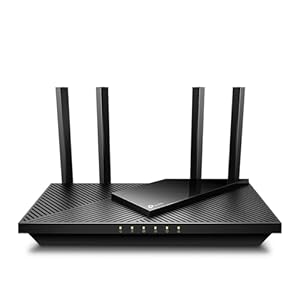
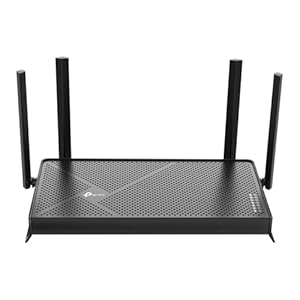
- Router quality: An outdated router may not support your plan's full speed. Make sure your router supports at least Wi-Fi 5 (802.11ac); Wi-Fi 6 or 6E is recommended for plans over 300 Mbps.
- Network congestion: Cable internet can slow during peak evening hours when neighbors are online.
- Distance from router: Wi-Fi signal weakens with distance and through walls.
Run a speed test at our speed test tool to see what you're actually getting. Test with both Wi-Fi and a wired Ethernet connection to identify where any bottleneck is.
How to Check What Speed You Currently Have
Log into your ISP's account portal to see your current plan speed. Then run a speed test to compare actual performance. If your actual speed is consistently less than 80% of your advertised speed, contact your provider. There may be a line issue, equipment problem, or network congestion that they can address.
Internet Speed Requirements by Activity (2026 Guide)
Internet speed needs have increased as streaming resolution has improved and more devices connect to home networks. Here are the current bandwidth requirements for common activities:
Basic Activities (1-10 Mbps)
- Web browsing and email: 1-5 Mbps
- Social media (scrolling, posting): 3-5 Mbps
- Music streaming (Spotify, Apple Music): 1-3 Mbps
- Standard definition video calls: 2-5 Mbps
Moderate Activities (10-50 Mbps)
- HD video streaming (1080p): 5-10 Mbps per stream
- HD video calls (Zoom, Teams): 4-8 Mbps up and down
- Online gaming (gameplay): 5-25 Mbps (latency matters more than raw speed)
- Working from home (cloud apps, VPN): 10-25 Mbps
Heavy Activities (50-200+ Mbps)
- 4K/UHD streaming: 25 Mbps per stream
- Large file downloads/uploads: 50+ Mbps preferred
- Game downloads (50-100 GB titles): 100+ Mbps drastically reduces wait time
- Cloud backup services: 50+ Mbps upload
- Multiple simultaneous 4K streams: 75-150 Mbps
Speed Recommendations by Household Size
The number of simultaneous users is the most important factor in choosing your speed tier:
- 1 person: 50-100 Mbps is sufficient for all common activities including 4K streaming, gaming, and working from home. Budget option: 25-50 Mbps if you only do one bandwidth-heavy activity at a time.
- 2 people: 100-200 Mbps handles two simultaneous heavy users comfortably. This covers scenarios like one person on a video call while the other streams 4K video.
- 3-4 people: 200-500 Mbps provides headroom for a family where multiple members stream, game, and use cloud applications simultaneously. This is the most common household scenario, and 300 Mbps is often the sweet spot of value and performance.
- 5+ people or smart home enthusiasts: 500 Mbps to 1 Gbps accounts for many simultaneous devices including security cameras, smart speakers, tablets, phones, computers, and streaming devices. Smart home devices individually use little bandwidth, but 20-30 connected devices add up.
Why You Might Not Need as Much Speed as You Think
Internet providers have an incentive to sell you the fastest (and most expensive) plan. Here is a reality check:
- Most devices cannot use gigabit speeds: A single device connected via Wi-Fi 5 maxes out around 400-500 Mbps. Wi-Fi 6 devices can theoretically hit 1 Gbps, but real-world Wi-Fi speeds are typically 300-600 Mbps. You only benefit from gigabit speeds when multiple devices are downloading simultaneously or you are using a wired ethernet connection.
- Speed tests vs. real usage: Running a speed test shows your maximum available bandwidth, but your typical activities use a fraction of it. Even during peak household usage (everyone streaming and browsing), most 3-4 person households rarely exceed 100-150 Mbps of actual concurrent demand.
- The "future-proofing" argument has limits: Providers often suggest buying more speed than you need for future-proofing. In reality, you can upgrade your plan at any time with most no-contract providers. There is no need to pay for 1 Gbps today if 300 Mbps meets your current needs — upgrade when your needs actually change.
Upload Speed: The Often-Overlooked Factor
Most speed discussions focus on download speed, but upload speed critically affects certain activities:
- Video calls: Your camera feed requires 3-5 Mbps upload for HD quality. If your upload speed drops below 3 Mbps, other call participants see blurry or frozen video from your end.
- Cloud storage and backup: Google Drive, Dropbox, iCloud, and OneDrive uploads are limited by your upload speed. A 1 GB file takes 13 minutes to upload at 10 Mbps but only 16 seconds at 500 Mbps.
- Content creation: YouTube uploads, TikTok posts, podcast uploads, and file sharing to clients all depend on upload speed.
- Gaming: Online gaming needs minimal upload (1-3 Mbps for gameplay), but streaming your gameplay to Twitch or YouTube requires 6-10 Mbps upload for HD quality.
If upload speed matters to you, fiber internet (with symmetrical speeds) is the clear choice over cable (which typically offers 1/10th the upload speed of download). See our fiber vs. cable comparison for more details.
Internet Speed for Specific Work-From-Home Scenarios
Remote work has fundamentally changed how households use internet bandwidth. Unlike streaming or browsing, work-from-home activities often require sustained, reliable connections during specific hours — and the consequences of inadequate speed are more immediate than a buffering video.
Video Conferencing Bandwidth Deep Dive
Zoom, Microsoft Teams, Google Meet, and WebEx each have different bandwidth profiles. A standard Zoom call uses 1.5-3.0 Mbps for HD video in both directions. However, the real bandwidth demand comes from multi-participant calls: a Zoom gallery view with 25+ participants can consume 4-6 Mbps download. If you are screen-sharing a presentation while on camera, add another 1-2 Mbps upload on top of your video feed.
The critical factor most speed guides overlook is that video conferencing is extremely sensitive to latency and jitter, not just raw bandwidth. A 50 Mbps connection with 80ms latency and frequent jitter will produce a worse Zoom experience than a 25 Mbps connection with 15ms latency and stable throughput. This is why fiber connections often outperform cable at the same speed tier for video calls — they deliver more consistent performance with lower latency.
Cloud-Based Work Applications
Modern workplaces run on cloud applications: Google Workspace, Microsoft 365, Salesforce, Slack, and various project management tools. Individually, each of these uses minimal bandwidth — typically under 5 Mbps. But when you are simultaneously on a Teams call, syncing a large file to OneDrive, downloading an attachment from Slack, and pushing code to GitHub, these concurrent demands add up quickly.
For remote workers handling large files — video editors, graphic designers, architects, or data analysts — upload speed becomes the bottleneck. Uploading a 500 MB video file to a cloud server on a 5 Mbps upload connection takes approximately 13 minutes. On a 20 Mbps upload connection, that same transfer completes in just over 3 minutes. If your work regularly involves uploading large files, prioritize plans with higher upload speeds, which typically means fiber.
VPN Overhead
Many remote workers connect through a company VPN (Virtual Private Network), which encrypts all traffic between your home and the corporate network. VPN encryption adds overhead that typically reduces your effective throughput by 10-30%, depending on the encryption protocol and server distance. If your VPN-free speed test shows 100 Mbps but your work requires VPN, budget for an effective speed of 70-90 Mbps. This overhead is another reason to choose a plan with headroom above your calculated minimum.
Understanding Bandwidth vs. Speed: What Actually Matters
Internet providers sell "speed" as a single number, but what you actually experience depends on multiple factors working together. Understanding these distinctions helps you make a more informed purchasing decision.
Bandwidth Is Not Speed
Technically, what providers advertise as "speed" is bandwidth — the maximum amount of data that can flow through your connection per second. Think of it as the width of a pipe: a wider pipe can carry more water, but the water does not move faster. A 500 Mbps connection does not load a single web page faster than a 100 Mbps connection for most sites. The difference becomes apparent when multiple devices and applications compete for that bandwidth simultaneously.
Latency: The Hidden Performance Factor
Latency measures the time it takes for data to travel from your device to a server and back, measured in milliseconds (ms). Low latency matters enormously for real-time applications: online gaming, video calls, voice-over-IP phone systems, and stock trading. Fiber connections typically deliver 5-15 ms latency, cable delivers 15-30 ms, DSL ranges from 25-50 ms, and satellite can exceed 500 ms. No amount of bandwidth compensates for high latency in these use cases.
The Role of Your Home Network
Your internet plan speed is only as fast as the weakest link in your home network chain. Common bottlenecks include outdated Wi-Fi routers that cannot deliver your full plan speed, congested Wi-Fi channels in apartment buildings, devices connected on the 2.4 GHz band instead of 5 GHz or 6 GHz, and ethernet cables rated below your plan speed (Cat5 cables cap at 100 Mbps). Before upgrading your internet plan, verify that your home network equipment can actually deliver higher speeds. A $30 ethernet cable or a $100 Wi-Fi 6 router upgrade may solve your performance issues without increasing your monthly bill.
2026 Speed Benchmarks: What Has Changed
Internet speed requirements have increased substantially even in the past two years, driven by several converging trends that affect everyday household usage.
Streaming Resolution Escalation
4K content is now the default on most major streaming platforms, and 8K content is beginning to appear. Netflix, Disney+, Apple TV+, and Amazon Prime Video all stream 4K HDR content requiring 25 Mbps per stream — up from the 5 Mbps needed for HD just a few years ago. Households that previously managed with 50 Mbps for two simultaneous streams now need 75+ Mbps just for entertainment, before accounting for any other usage.
Smart Home Device Proliferation
The average connected household in 2026 has 15-25 internet-connected devices, up from 8-10 in 2020. Smart thermostats, security cameras, doorbell cameras, smart speakers, robot vacuums, smart lighting, and connected appliances each consume a small amount of bandwidth individually (typically 1-5 Mbps), but collectively they create a persistent baseline demand of 20-40 Mbps that is always present regardless of what you are actively doing. Security cameras are the biggest culprits: a single 4K outdoor camera streaming continuously to the cloud uses 10-15 Mbps upload.
Cloud Gaming and AI Applications
Cloud gaming services like Xbox Cloud Gaming, NVIDIA GeForce NOW, and PlayStation streaming require 35-50 Mbps for a high-quality experience. Unlike traditional gaming where the game runs on your local console, cloud gaming streams video from a remote server, making it bandwidth-intensive with strict latency requirements under 40 ms for playable responsiveness. AI applications are also emerging as bandwidth consumers — tools like ChatGPT, Copilot, and Midjourney currently use minimal bandwidth, but local AI models and real-time AI video tools are on the horizon with higher demands.
Frequently Asked Questions
Is 100 Mbps fast enough for a family?
For a family of 2 to 3 with moderate usage (HD streaming, browsing, social media), 100 Mbps is usually sufficient. For families of 4 or more with heavy usage (4K streaming, gaming, remote work), 200 to 500 Mbps provides a better experience with headroom for growth.
Do I really need gigabit internet?
Most households don't need gigabit speeds. The primary benefits are faster large file downloads, more headroom for many simultaneous users, and future-proofing. If you have fewer than 5 heavy users and aren't regularly downloading huge files, a 300 to 500 Mbps plan offers better value.
What's more important: download or upload speed?
For most people, download speed matters more because the majority of internet activity is download-based. However, upload speed is critical for video conferencing, live streaming, cloud backups, and content creation. If you work from home or create content, prioritize a plan with at least 25 Mbps upload speed. Fiber providers offer symmetrical speeds that handle both equally well.
Why is my internet slow even though I have a fast plan?
Common causes include Wi-Fi interference (too far from router or too many walls between), an outdated router that can't deliver your plan's full speed, network congestion during peak hours (cable internet), too many devices connected simultaneously, or background updates consuming bandwidth. Test with Ethernet to determine if Wi-Fi is the bottleneck.
How much speed do I need for 4K streaming?
Each 4K stream requires 25 Mbps (or 35-40 Mbps for 4K HDR). If you're streaming 4K on two TVs simultaneously, you need 50 to 80 Mbps just for video, plus additional bandwidth for other devices and activities. A 200 Mbps plan comfortably handles 4K streaming alongside normal household usage. Check out our best internet for streaming guide for provider picks.
Should I get a faster plan or a better router?
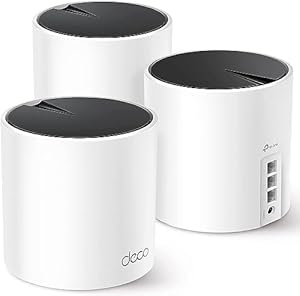
First, run a speed test with a wired Ethernet connection. If wired speeds match your plan, the bottleneck is your Wi-Fi setup — a better router or mesh system will help more than a faster plan. If wired speeds are also slow, you may need a plan upgrade. Always optimize your network setup before paying for more speed.
Sources & Methodology
This article uses data from FCC Broadband Data Collection reports, U.S. Census Bureau demographics, and verified provider pricing and plan information. Pricing, speeds, and availability are verified against provider broadband nutrition labels and may vary by location. For a detailed explanation of our data collection and scoring process, see our methodology page.
Data Sources
- FCC Broadband Data Collection
- U.S. Census Bureau American Community Survey
- USAC Universal Service Fund
- NTIA Internet Use Survey
Last verified: March 2026. InternetProviders.ai is an independent resource. We may earn commissions from partner links — this does not affect our editorial recommendations. See our methodology for details.