Att Internet offers a range of internet service, at&t wireless, speed test designed to meet different household needs. Read on for our comprehensive at&t internet review, including plans, pricing, and availability.
AT&T is one of the largest internet service providers in the United States, delivering fiber-optic internet (AT&T Fiber) across 21 states and parts of its legacy DSL network in areas where fiber hasn't reached yet. With symmetric upload and download speeds up to 5 Gbps, no annual contracts, and no data caps on fiber plans, AT&T Fiber competes directly with Verizon Fios and Google Fiber as a premium residential internet option.
In this review, we break down every AT&T internet plan, analyze real-world performance data, and help you decide whether AT&T is the right ISP for your home.
Quick Answer: Is AT&T Internet Worth It?
Yes, for most households in AT&T Fiber coverage areas. AT&T Fiber delivers genuinely symmetric speeds with no data caps and no contracts — a combination only a few fiber providers match. The Internet 300 plan at $55/mo is strong value for small households, while the Internet 1000 plan ($80/mo) is the sweet spot for families and remote workers. The premium 2 Gbps and 5 Gbps tiers are overkill for most users but available for power users who need the headroom.
If you're in a DSL-only area, AT&T's legacy service is significantly less competitive. Consider fixed wireless alternatives like T-Mobile Home Internet or Starlink if fiber isn't available at your address.
Key Takeaways
- Symmetric fiber speeds — Upload speeds match download speeds on all fiber plans (300 Mbps to 5 Gbps)
- No data caps — All AT&T Fiber plans include unlimited data at no extra cost
- No annual contracts — Month-to-month billing on every plan; cancel anytime without penalties
- AT&T All-Fi smart router — Included free on all fiber plans; supports Wi-Fi 6 or Wi-Fi 6E depending on tier
- ActiveArmor security — Free network-level security suite included with every fiber plan
- 21-state coverage — Fiber available in major metros across the South, Midwest, and West; expanding rapidly
AT&T Internet Plans & Pricing
| Plan | Download Speed | Upload Speed | Price | Best For |
|---|---|---|---|---|
| Internet 300 | 300 Mbps | 300 Mbps | $55/mo | Couples, light streaming |
| Internet 500 | 500 Mbps | 500 Mbps | $65/mo | Small families, remote work |
| Internet 1000 | 1 Gbps | 1 Gbps | $80/mo | Large households, 4K streaming, gaming |
| Internet 2000 | 2 Gbps | 2 Gbps | $150/mo | Home offices, content creators |
| Internet 5000 | 5 Gbps | 5 Gbps | $180/mo | Power users, home labs, multiple 4K streams |
Prices shown are the current monthly rate. AT&T Fiber plans have no promotional pricing that increases after 12 months — the price you see is the price you pay. Equipment (AT&T All-Fi router) is included at no additional cost.
AT&T Internet 300 — Best Entry-Level Fiber Plan
AT&T's Internet 300 plan delivers 300 Mbps symmetric speeds for $55/mo, making it the most affordable way to get AT&T Fiber. With 300 Mbps upload and download, this plan comfortably handles HD and 4K streaming on 2–3 devices simultaneously, video calls, and everyday browsing.
What's included: AT&T All-Fi Wi-Fi 6 router, ActiveArmor internet security, no data cap, no contract.
Best for: Individuals and couples who stream, browse, and work from home on a few devices. If you don't need multi-gig speeds, this plan offers excellent value per Mbps.
AT&T Internet 500 — The Remote Work Sweet Spot
At $65/mo for 500 Mbps symmetric, the Internet 500 plan adds significant headroom for households with 4–6 connected devices. The symmetric 500 Mbps upload is particularly valuable for remote workers who spend hours on Zoom, upload large files, or use cloud-based productivity tools.
What's included: AT&T All-Fi Wi-Fi 6 router, ActiveArmor internet security, no data cap, no contract.
Best for: Small families and remote workers who need reliable upload speeds for video conferencing and cloud backups without paying for gigabit.
AT&T Internet 1000 — Best Plan for Most Households
The Internet 1000 (Gigabit) plan is AT&T Fiber's most popular tier at $80/mo. With 1 Gbps symmetric speeds, it can handle virtually any residential workload: simultaneous 4K streaming on multiple TVs, competitive online gaming with low latency, large file downloads, and a smart home full of connected devices.
What's included: AT&T All-Fi Wi-Fi 6 router, ActiveArmor internet security, no data cap, no contract.
Best for: Families of 3–5 with heavy internet usage. This is the sweet spot where you get true gigabit performance without paying the premium for multi-gig.
AT&T Internet 2000 — For Content Creators & Home Offices
The Internet 2000 plan ($150/mo) delivers 2 Gbps symmetric speeds and ships with AT&T's upgraded Wi-Fi 6E gateway, which supports the 6 GHz band for less interference and higher throughput on compatible devices. This tier makes sense if you regularly upload large video files, run a home server, or have 10+ devices competing for bandwidth.
What's included: AT&T All-Fi Wi-Fi 6E gateway, ActiveArmor internet security, no data cap, no contract.
Best for: Content creators, professional streamers, and power users with home lab setups or NAS devices that benefit from multi-gig symmetric bandwidth.
AT&T Internet 5000 — Maximum Residential Speed
AT&T's top-tier Internet 5000 plan delivers 5 Gbps symmetric for $180/mo — the fastest residential internet plan AT&T offers. Available in select fiber markets, this plan is designed for users who need extreme bandwidth headroom: multiple simultaneous 4K/8K streams, high-throughput home labs, and environments with 20+ connected devices.
What's included: AT&T All-Fi Wi-Fi 6E gateway, ActiveArmor internet security, no data cap, no contract.
Best for: Tech enthusiasts, home lab operators, and large households that push the limits of residential internet. Most users won't need this tier, but it exists for those who do.
AT&T Fiber Network & Technology
AT&T Fiber uses fiber-to-the-home (FTTH) architecture, meaning a dedicated fiber-optic cable runs directly from AT&T's network to an Optical Network Terminal (ONT) installed at your residence. This is the same technology used by Verizon Fios and Google Fiber — and it's significantly faster and more reliable than cable (DOCSIS) or DSL connections.
Why Fiber Matters
- Symmetric speeds — Unlike cable internet where upload speeds are a fraction of download, AT&T Fiber delivers equal upload and download speeds on every plan
- Low latency — Fiber connections typically deliver 5–15ms latency compared to 15–30ms on cable, which matters for gaming and video calls
- No shared bandwidth — Your fiber line isn't shared with neighbors, so speeds don't degrade during peak evening hours the way cable connections can
- Future-proof infrastructure — FTTH networks can be upgraded to higher speeds without replacing the physical fiber; AT&T has already moved from 1 Gbps to 5 Gbps on the same infrastructure
AT&T All-Fi Router
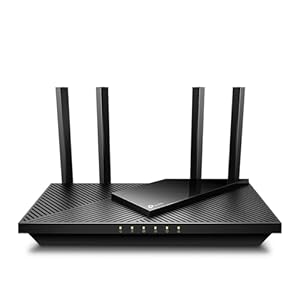
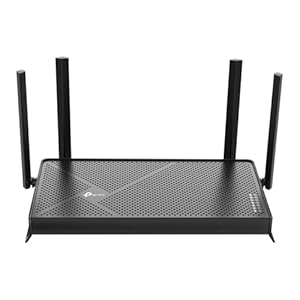
Every AT&T Fiber plan includes the AT&T All-Fi smart router at no extra charge. The lower-tier plans (300–500 Mbps) include a Wi-Fi 6 gateway, while the 1 Gbps+ plans include a Wi-Fi 6E gateway with support for the 6 GHz band. The router features band steering, device prioritization, and integration with the AT&T Smart Home Manager app for parental controls and network management.
ActiveArmor Security
AT&T includes ActiveArmor internet security on all fiber plans at no additional cost. ActiveArmor provides network-level protection against malicious websites, suspicious IP addresses, and DDoS-style attacks — all applied at the router level without requiring software installation on individual devices.
Legacy DSL Service
In areas where fiber hasn't been deployed, AT&T still offers legacy DSL service (branded as AT&T Internet). DSL speeds typically max out at 50–100 Mbps download with much slower upload speeds (5–10 Mbps). If you're currently on AT&T DSL, check your address regularly — AT&T is actively expanding fiber, and many DSL areas are scheduled for fiber buildout in 2025–2027.
Pros and Cons of AT&T Internet
Pros
- Truly symmetric speeds — Upload speeds match download on all fiber plans, unlike cable providers where uploads are often 10–35 Mbps even on gigabit plans
- No data caps — AT&T removed data caps from all fiber plans in 2021; you'll never pay overage fees or get throttled
- No annual contracts — Cancel anytime without early termination fees; pricing is straightforward with no promotional rate that expires
- Free equipment — AT&T All-Fi router included at no charge; no $10–15/mo equipment rental fee like some cable providers charge
- Strong security suite — ActiveArmor included free provides meaningful network-level protection
- Multi-gig options — 2 Gbps and 5 Gbps tiers available for power users who need extreme bandwidth
Cons
- Fiber availability is limited — Only available in 21 states, and even within those states, fiber coverage is concentrated in urban/suburban areas
- DSL alternative is weak — If fiber isn't at your address, the fallback DSL service is significantly slower and less competitive
- Professional installation required — Fiber plans require a technician visit (1–3 hours); you can't self-install like cable or fixed wireless
- Premium pricing on top tiers — The 2 Gbps ($150/mo) and 5 Gbps ($180/mo) plans are expensive relative to what most households actually need
- No bundled TV service — AT&T spun off DirecTV; there's no traditional cable TV bundle available (though Max streaming is sometimes included with promotions)
AT&T Internet Coverage & Availability
AT&T Fiber is available in 21 states, with the strongest coverage in Texas, California, Florida, Georgia, Illinois, and North Carolina. Major metros with extensive fiber coverage include:
- Texas: Dallas–Fort Worth, Houston, San Antonio, Austin
- California: Los Angeles, San Francisco, San Diego, Sacramento
- Florida: Miami, Jacksonville, Tampa, Orlando
- Georgia: Atlanta metro area
- Illinois: Chicago metro area
- North Carolina: Charlotte, Raleigh–Durham
- Tennessee: Nashville, Memphis
- Ohio: Cleveland, Columbus, Cincinnati
- Michigan: Detroit metro area
AT&T has committed to expanding fiber to 30+ million locations by 2025 and continues to build out in suburban and rural-adjacent areas. Check your address at att.com/internet for current availability.
Related Resources
- Brightspeed vs AT&T: Plans & Pricing (2026)
- Google Fiber vs AT&T Internet: Plans & Pricing (2026)
- AT&T vs Spectrum in Dallas 2026 — Internet Plans Compared
Data and methodology details are available on our research methodology page. Speeds, prices, and availability are verified against provider websites and FCC broadband data as of 2026.
Sources
This content references data from FCC Broadband Map, U.S. Census Bureau, AT&T Internet. Pricing and availability are subject to change.
Market Context
The broadband market concentration in the United States served by providers like AT&T Internet varies based on population density and infrastructure investment. According to FCC broadband deployment data, median household income and population density are key factors in service availability and pricing. The BEAD (Broadband Equity, Access, and Deployment) program may expand options in underserved areas of the United States.