Quick Answer: Best Internet for Streaming in 2026
For reliable streaming, you need at least 25 Mbps per 4K stream. A household streaming on 3-4 devices simultaneously should aim for 100-200 Mbps. Spectrum and AT&T Fiber are top picks thanks to no data caps and consistent speeds. Avoid providers with strict data caps if you're a heavy streamer, as 4K content can burn through 1 TB in under 100 hours. Use our availability checker to find the best streaming-ready plans at your address.
Internet Speed Requirements for Streaming Video
Streaming video is the single largest consumer of household bandwidth in 2026. According to recent data, the average American household streams over 8 hours of video content daily across multiple devices, and that number continues to climb. Understanding exactly how much bandwidth each stream requires helps you choose a plan that delivers buffer-free viewing without overpaying for speeds you don't need.
The speed you need depends on two key factors: the resolution you're streaming at, and how many simultaneous streams your household runs. Here's the breakdown by resolution quality:
Speed Requirements by Resolution
| Stream Quality | Speed Per Stream | Data Usage Per Hour | Visual Quality |
|---|---|---|---|
| SD (480p) | 3-5 Mbps | 0.7 GB | Acceptable on phones/tablets |
| HD (720p) | 5-10 Mbps | 1.5 GB | Good on smaller screens |
| Full HD (1080p) | 10-15 Mbps | 3 GB | Sharp on TVs up to 50" |
| 4K UHD (2160p) | 25-40 Mbps | 7 GB | Best for large screens |
| 4K HDR (Dolby Vision) | 35-50 Mbps | 10 GB | Premium cinematic quality |
| 8K (4320p) | 80-100 Mbps | 24 GB | Limited content available |
These numbers represent the sustained bandwidth needed for a single stream. In practice, streaming services use adaptive bitrate technology that adjusts quality based on your available bandwidth. This means if your connection dips briefly, the service will reduce quality rather than buffer, but you'll notice the difference on a large screen.
Calculating Your Household's Streaming Needs
The critical mistake most people make is buying internet based on a single device. In reality, modern households have multiple people streaming simultaneously, often while other devices perform background tasks. Here's a realistic calculation framework:
Scenario Calculations
Single Person, Casual Viewer: One 4K stream (25 Mbps) + phone browsing (5 Mbps) + smart home devices (5 Mbps) = 35 Mbps minimum, 50 Mbps recommended
Couple, Regular Streamers: Two simultaneous HD streams (30 Mbps) + phone/tablet use (10 Mbps) + smart home (5 Mbps) = 45 Mbps minimum, 100 Mbps recommended
Family of Four: Two 4K streams (50 Mbps) + one HD stream (15 Mbps) + gaming (25 Mbps) + phones/tablets (15 Mbps) + smart home (10 Mbps) = 115 Mbps minimum, 200-300 Mbps recommended
Large Household (5+): Three 4K streams (75 Mbps) + two HD streams (30 Mbps) + multiple devices (30 Mbps) + smart home (15 Mbps) = 150 Mbps minimum, 300-500 Mbps recommended
We recommend buying a plan with 50-100% more bandwidth than your calculated minimum to account for peak usage, background updates, and the headroom needed for adaptive streaming to maintain maximum quality. Test your current connection with our speed test tool.
Data Caps: The Hidden Streaming Killer
Data caps are the most overlooked factor when choosing internet for streaming. Many providers, especially cable companies, impose monthly data limits that can be quickly exhausted by heavy streaming. Here's how fast you can burn through a 1 TB data cap:
- SD streaming: ~1,400 hours (plenty for most users)
- HD (1080p) streaming: ~333 hours (~11 hours/day)
- 4K streaming: ~143 hours (~4.7 hours/day)
- 4K HDR streaming: ~100 hours (~3.3 hours/day)
A family of four watching 4K content for 3-4 hours each evening, plus weekend viewing, can easily exceed 1 TB in a month. When you exceed your cap, most providers either charge overage fees ($10-$15 per 50 GB block) or throttle your speeds to unusable levels.
Providers With No Data Caps
- Spectrum: All plans include unlimited data at no extra cost
- AT&T Fiber: All fiber plans include unlimited data
- Verizon Fios: No data caps on any plan
- Google Fiber: No data caps
- Frontier Fiber: No data caps on fiber plans
- T-Mobile 5G Home Internet: Truly unlimited (no hard cap, deprioritization possible)
Providers With Data Caps
- Xfinity: 1.2 TB cap on most plans (unlimited add-on available for $30/mo)
- Cox: 1.25 TB cap (unlimited available for $50/mo)
- HughesNet: 15-200 GB depending on plan
- Viasat: Priority data limits with reduced speeds after exhaustion
If you stream frequently in 4K, we strongly recommend choosing a provider with no data cap or budgeting for the unlimited data add-on. The overage fees can quickly exceed the cost of the add-on. Compare your options at our cheapest providers guide.
Best Streaming Services and Their Internet Requirements
Each streaming platform has slightly different bandwidth requirements and encoding efficiency. Here's what the major services recommend in 2026:
Netflix
Netflix uses advanced AV1 encoding that's more efficient than older codecs. Requirements: 3 Mbps for SD, 5 Mbps for HD, 15 Mbps for 4K. Their Premium plan allows 4 simultaneous streams in 4K. Netflix also downloads content in the background for offline viewing, which uses additional bandwidth.
Disney+ / Hulu
Disney+ requires 5 Mbps for HD and 25 Mbps for 4K content. Hulu Live TV requires 8 Mbps for live content and 16 Mbps for 4K. Both services support up to 4 simultaneous streams on premium plans.
YouTube / YouTube TV
YouTube is the most bandwidth-hungry service for high-quality content. 4K at 60fps requires 35-50 Mbps, and 4K HDR can peak at 70 Mbps. YouTube TV (live television) requires 7-13 Mbps depending on quality settings.
Apple TV+ / Amazon Prime Video
Apple TV+ uses highly efficient HEVC encoding, requiring just 20 Mbps for 4K Dolby Vision. Amazon Prime Video requires 15 Mbps for 4K UHD. Both are among the most efficient streamers in terms of bandwidth usage.
Live Sports Streaming
Live sports on platforms like ESPN+, Peacock, and Amazon Prime require consistent bandwidth since there's no buffer cushion. Plan for 15-25 Mbps per live sports stream, and ensure low jitter to avoid mid-play buffering during crucial moments. A fiber connection from a provider like Verizon Fios or AT&T Fiber provides the consistency that live sports demand.
WiFi Optimization for Streaming
Your WiFi setup can make or break your streaming experience, even with a fast internet plan. Here are the most impactful optimizations:
5 GHz vs 2.4 GHz Bands
The 5 GHz band offers significantly higher throughput than 2.4 GHz, making it ideal for 4K streaming. However, 5 GHz has shorter range and worse wall penetration. Place your streaming devices on the 5 GHz band when they're within 30 feet of your router, and reserve 2.4 GHz for distant devices and smart home gadgets that don't need high bandwidth.
WiFi 6E and WiFi 7
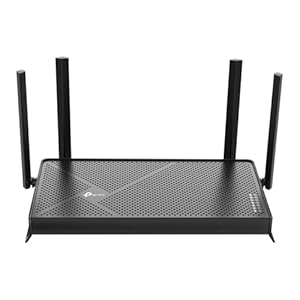
If your streaming devices support WiFi 6E or WiFi 7, upgrading your router to match can dramatically improve performance in congested environments. The 6 GHz band available in WiFi 6E is virtually interference-free, providing the consistent throughput needed for 4K HDR streaming. WiFi 7's multi-link operation can use multiple bands simultaneously, virtually eliminating buffering.
Mesh Network Systems
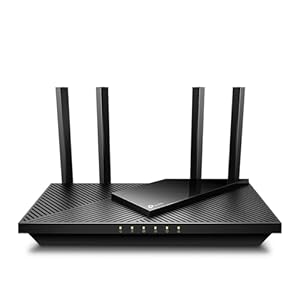
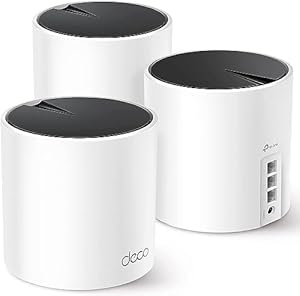
For homes larger than 1,500 square feet, a mesh network system is often the best solution for consistent streaming throughout the house. Systems from Eero, Google Nest WiFi, and TP-Link Deco place multiple access points around your home, ensuring every room has strong signal strength. Look for mesh systems with dedicated backhaul bands that don't share bandwidth with your devices.
Ethernet Backhaul for Streaming Devices
For your primary streaming TV, connecting via Ethernet cable eliminates WiFi variables entirely. Most smart TVs, streaming sticks (Apple TV 4K, Nvidia Shield), and gaming consoles have Ethernet ports. Even running one Ethernet cable to your main viewing area can dramatically improve reliability while leaving WiFi available for mobile devices throughout the house.
Smart TV vs Streaming Device Performance
Not all streaming hardware handles bandwidth equally. The device you use to watch content can affect streaming quality independent of your internet connection:
Smart TVs vary widely in streaming performance. Higher-end models from Samsung, LG, and Sony have powerful processors that handle 4K decoding smoothly, but budget smart TVs often struggle with 4K HDR content and may buffer even with adequate bandwidth. Smart TV apps also tend to receive updates less frequently than dedicated streaming devices.
Dedicated Streaming Devices like Apple TV 4K, Nvidia Shield Pro, and Amazon Fire TV Stick 4K Max generally outperform built-in smart TV apps. They have faster processors, better WiFi radios, and receive more frequent software updates. The Apple TV 4K and Nvidia Shield Pro both support WiFi 6E and Ethernet connections, making them ideal for 4K HDR streaming.
Our Recommendation: Use a dedicated streaming device connected via Ethernet or WiFi 6E for your primary viewing TV. Use built-in smart TV apps for secondary TVs where the occasional quality dip is less noticeable.
Top Provider Recommendations for Streaming
Best Overall: AT&T Fiber
AT&T Fiber combines fast symmetric speeds with no data caps, making it the complete package for streaming households. Their 500 Mbps plan at $55/month easily handles a family streaming 4K on multiple devices simultaneously. The symmetric speeds also mean uploads for video calls and cloud backups won't impact your streaming quality. Learn more about AT&T Fiber.
Best Value: Spectrum
Spectrum's combination of no data caps, no contracts, and competitive pricing makes it the best value for streamers. Their 300 Mbps plan at $49.99/month with truly unlimited data is hard to beat, especially since you won't face overage charges no matter how much 4K content you watch. View Spectrum plans.
Best Budget: T-Mobile 5G Home Internet
At $50/month ($25-$30 with qualifying phone plan), T-Mobile 5G Home Internet offers unlimited data with no contract. Speeds vary by location but typically range from 33-245 Mbps, sufficient for most streaming needs. The unlimited data with no hard cap is particularly valuable for streaming households on a budget. Read our 5G guide.
Best Premium: Google Fiber
For households that want zero compromises, Google Fiber's 2 Gbps plan at $100/month provides enough bandwidth for a dozen 4K streams simultaneously with bandwidth to spare. No data caps, symmetric speeds, and consistently excellent performance make it the premium choice. Check Google Fiber availability.
Not sure what's available at your address? Use our availability checker to compare streaming-ready plans from all providers in your area. You can also see how providers compare head-to-head in our comparison guides.
Get the Best Internet for Streaming
Speak with an agent to find the best streaming plan for your household:
Spectrum
No data caps on any plan — stream 4K all month without limits
1-844-481-5997 Check AvailabilityAT&T Fiber
Symmetric fiber speeds with unlimited data for seamless streaming
1-855-850-5977 View PlansFrequently Asked Questions: Streaming Internet
How much internet speed do I need for 4K streaming?
A single 4K stream requires 25-40 Mbps depending on the service and whether HDR is enabled. For a household with multiple 4K streams, multiply accordingly: two 4K streams need 50-80 Mbps, three need 75-120 Mbps. We recommend having at least 50% more bandwidth than your calculated minimum to maintain consistent quality during peak usage.
Will a 1 TB data cap be enough for streaming?
For moderate streaming, yes. A 1 TB cap allows approximately 333 hours of HD (1080p) streaming or 143 hours of 4K streaming per month. A family that streams 3-4 hours of 4K daily will come close to or exceed 1 TB. If you regularly stream 4K content, we recommend choosing a provider with no data cap or purchasing an unlimited data add-on.
Why does my stream buffer even though I have fast internet?
Buffering with fast internet is usually caused by WiFi issues, not your ISP's speed. Common culprits include: distance from your router, WiFi interference from other devices, using the congested 2.4 GHz band instead of 5 GHz, or an outdated router. Try connecting your streaming device via Ethernet or moving your router closer. Also check for background downloads consuming bandwidth.
Is fiber internet better than cable for streaming?
Fiber provides more consistent speeds and lower latency, but for pure streaming purposes, cable internet is usually sufficient. The main advantage of fiber for streaming is that it's less susceptible to peak-hour congestion and typically comes with no data caps. Cable can deliver the same raw speeds, but may slow down during evening peak hours when neighbors are also streaming.
Can I stream on 5G home internet?
Yes, 5G home internet from T-Mobile or Verizon can handle most streaming needs. Speeds typically range from 33-300 Mbps, sufficient for multiple HD or 4K streams. The main advantage is truly unlimited data with no hard caps. Performance varies by location and tower congestion, so results are less predictable than wired connections.
Do I need a mesh WiFi system for streaming?
If your home is larger than 1,500 square feet or you experience dead zones, a mesh WiFi system can significantly improve streaming quality throughout your home. For smaller homes where your router reaches all rooms adequately, a single high-quality WiFi 6 or 6E router is sufficient. Consider mesh if you notice buffering in rooms far from your router.
What's the best streaming device for a poor internet connection?
If your internet is on the slower side, the Roku Streaming Stick 4K and Amazon Fire TV Stick 4K Max are excellent choices because they handle adaptive bitrate streaming very efficiently, smoothly adjusting quality without noticeable interruptions. Both also support downloaded content for offline viewing, which can supplement streaming during slow periods.
Should I get a separate streaming subscription or a bundle with my ISP?
ISP bundles can offer genuine savings. For example, several providers include streaming services like Peacock, Apple TV+, or Disney+ with their internet plans. Compare the total cost of the internet plan plus any included streaming services against buying them separately. Often the bundle saves $10-$20/month, effectively reducing your internet cost.
Disclosure: InternetProviders.ai may earn a commission when you sign up for an internet plan through our links. This does not influence our rankings or recommendations, which are based on independent research, testing, and analysis. Our editorial team evaluates providers on metrics including speed consistency, data cap policies, pricing transparency, and customer satisfaction. We are committed to helping you find the best internet for your streaming needs. Learn more about our editorial process.
Sources & Methodology
This article uses data from FCC Broadband Data Collection reports, U.S. Census Bureau demographics, and verified provider pricing and plan information. Pricing, speeds, and availability are verified against provider broadband nutrition labels and may vary by location. For a detailed explanation of our data collection and scoring process, see our methodology page.
Data Sources
- FCC Broadband Data Collection
- U.S. Census Bureau American Community Survey
- USAC Universal Service Fund
- NTIA Internet Use Survey
Last verified: March 2026. InternetProviders.ai is an independent resource. We may earn commissions from partner links — this does not affect our editorial recommendations. See our methodology for details.